

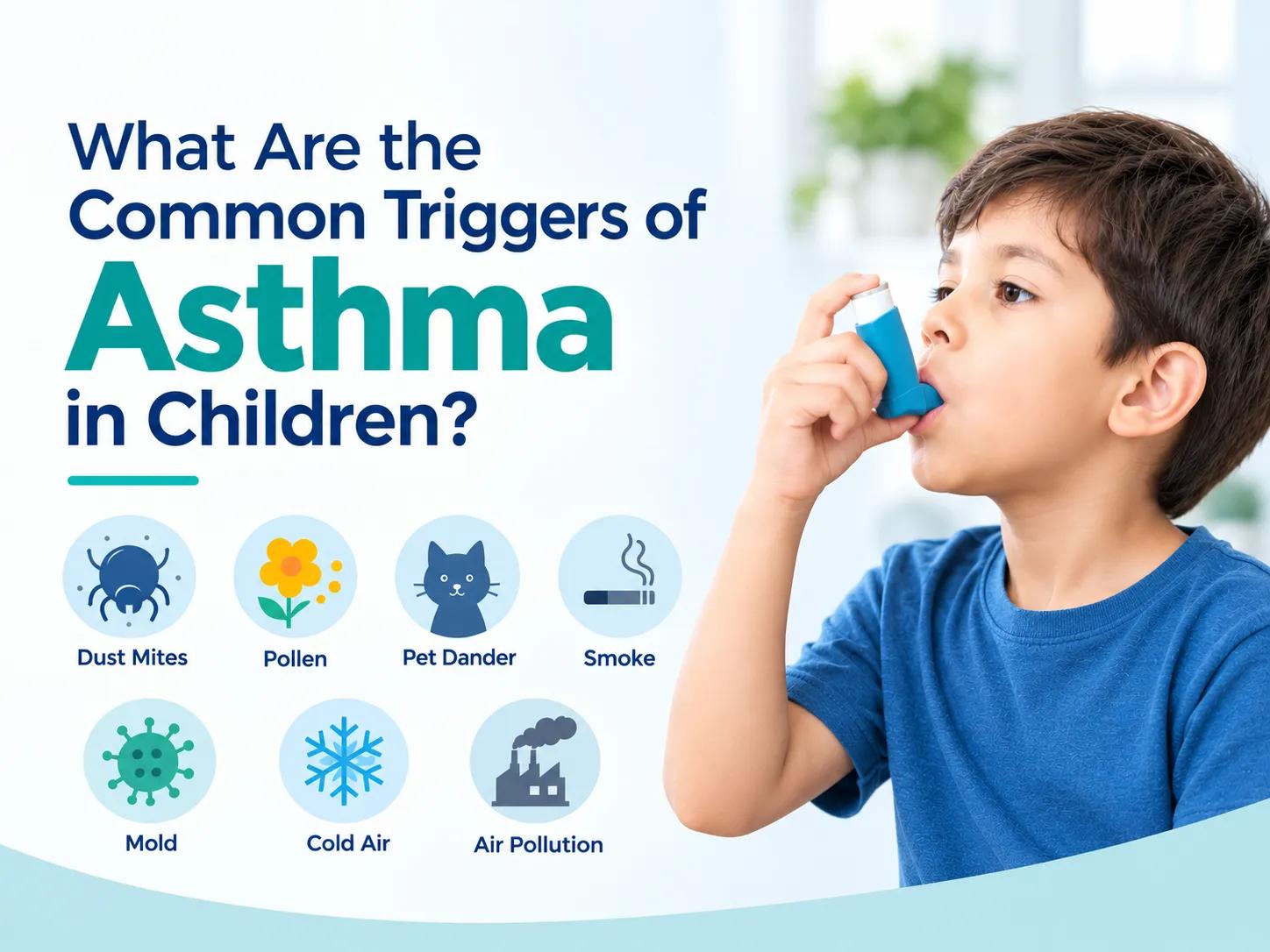
Asthma is a common childhood respiratory illness that can cause children to cough, wheeze, feel tightness in the chest and have trouble breathing over and over again. It can occur in children of all ages and the symptoms may vary from child to child. Certain allergens, environmental conditions, respiratory infections, exercise or irritants often trigger or worsen asthma symptoms.
An important component of effective management of a child with asthma includes triggers or exacerbating factors. Understanding what triggers their child enables parents to take practical measures to lessen exposure and lower the chance of asthma flare-ups.
If your child has frequent episodes of coughing, wheezing or breathing problems, you should see a qualified pediatrician for proper evaluation, diagnosis and management.
What Is Asthma in Kids?
Asthma is an ongoing disease that affects the airways, causing them to be inflamed, swollen, and occasionally constricted. The airways of a child could swell up, make mucus, and even tighten once he comes into contact with a trigger. This makes breathing difficult because air cannot flow freely in and out of the lungs.
Some of the symptoms of childhood asthma can include:
Constant coughing at night time or early morning
Breathing sounds like whistling in the chest
Trouble breathing
Discomfort or tightness in the chest
Difficulty breathing or coughing during exercise
Symptoms of respiratory problems following exposure to triggers
All children who suffer from these symptoms don’t necessarily have asthma. These symptoms can also be caused by other respiratory problems.
Common Asthma Triggers in Kids
1. Dust and Dust Mite
Dust and dust mites are common asthma triggers, especially in sensitive children. Dust mites are tiny creatures that live in bedding, mattresses, carpets, curtains and upholstered furniture.
Parents can help to reduce exposure by:
Frequent washing of bed sheets
Maintaining the child’s room clean and well ventilated
Reducing dust collection
Regular cleaning of carpets and upholstery.
Using appropriate dust mite control when recommended
2. Outdoor Allergens and Pollen
Some children’s asthma symptoms are triggered by pollen from trees, grass and weeds. Symptoms can worsen during the pollen season.
“If pollen is a known trigger, parents might want to keep windows closed during high pollen exposure times and encourage children to wash their face, hands and hair and change clothes after spending prolonged periods of time outdoors.
3. Animal Dander
Children with animal allergies may develop asthma symptoms when they are exposed to cats, dogs, and other furry animals. It doesn’t have to be the animal's fur that is the cause. Allergies can be caused by proteins found in the skin flakes, saliva and other animal dander.
If your child is sensitive to allergens from pets, it may help to limit their exposure and keep pets out of your child's sleeping area.
4. Tobacco Smoke and Air Pollution
Tobacco smoke is a strong airway irritant and may exacerbate asthma symptoms in children. Respiratory problems and difficulty managing asthma can be caused by secondhand smoke.
Children with sensitive airways may also be affected by outdoor air pollution, vehicle emissions, industrial pollutants and other airborne irritants.
Parents should also keep their homes smoke-free and consider curtailing outdoor activities when air-quality conditions are poor.
5. Respiratory tract infections
Some children also develop asthma-like symptoms after viral respiratory infections such as a common cold or influenza.” If an infection develops, cough, wheeze or difficulty breathing may occur as the airways become further inflamed and irritated.
Parents should watch their children with asthma closely if they get respiratory infections and follow the treatment and action plan recommended by their health care provider.
6. Changes in the weather and cold air
Some children have sensitive airways and cold or dry air can irritate the airways. Sudden weather or temperature changes can bring on asthma symptoms.
If your child has symptoms, cover their mouth and nose with a scarf when outside in cold weather and avoid sudden exposure to very cold air.
7. Physical Exercise and Activity
Physical and mental health of a child is important with exercise. But some children may cough, wheeze or have difficulty breathing during or after running, sports or other physical activities.
In some cases it is not necessary to stop exercising because a child has symptoms while exercising. Children with asthma can participate in sports and be active safely with proper asthma management and guidance from a health care professional.
8. Chemical Irritants and Strong Smells
Strong scented products such as perfumes, air fresheners, cleaning products, sprays and paints can irritate sensitive airways.
When possible, parents can choose mild or fragrance-free household products and ensure good ventilation when cleaning or using chemical products to reduce exposure.
9. Stress and Intense Emotions
Crying, laughing, anxiety or stress are strong emotions that sometimes can worsen asthma symptoms in susceptible children. Emotions may change breathing patterns and may contribute to respiratory symptoms.
A calm, supportive environment may be beneficial. Parents should also help children understand their condition and learn ways to follow their asthma management plan.
10. Allergens and Food Allergies
Some children with asthma also have allergies to certain foods or other things. Sometimes a food allergy can cause a severe allergic reaction that affects breathing and needs emergency treatment.
There is no need for parents to cut out foods unnecessarily from a child’s diet. But if you suspect a food is causing an allergic reaction, speak with a pediatrician or allergy specialist so they can give you a proper evaluation and advice.
How can parents help prevent asthma flareups?
The first step is to identify what may be triggering or exacerbating your child’s symptoms. Parents can keep a simple symptom diary including when symptoms occur, what the child was doing, environmental conditions, recent illnesses and possible exposures.
Other useful measures are:
Keep the child’s room clean and well-ventilated.
Don’t smoke around children. Keep your home smoke-free.
Wash your bedding often.
Avoid known allergens
Keep sensitive children away from strong chemical odors and perfumes.
Encourage physical activity as prescribed by the child’s doctor.
Follow the child’s asthma action plan.
Administer prescribed medications as directed.
Attend your follow-up appointments regularly.
When to See a Doctor for Parents?
“If asthma symptoms are frequent or worsening, parents should not ignore them. If your child has ongoing wheezing, coughs frequently at nite, has trouble breathing often, finds it difficult to do normal activities or if their symptoms are getting worse or happening more often, parents should seek medical advice.
Some symptoms may be indicators of medical emergency. If you have very severe difficulty breathing, bluish lips or face, or if you pull in your chest or ribs very far while breathing, or you are confused, extremely exhausted, or unable to speak normally because of breathlessness, you need emergency medical care right away.
Choosing the Right Pediatric Services
There are many possible causes of recurrent coughing, wheezing and breathing difficulties. The pediatrician can look at the child's symptoms, medical history, allergies, environmental exposures and other factors to see whether asthma or another respiratory condition might be involved.
Early evaluation can help parents understand the reason for their child’s recurrent respiratory symptoms and what they can do to control potential asthma triggers.
Neelkanth Hospital is the Best Paediatrics & Child Care Hospital in Gurgaon for kids with multiple health problems. Recurrent respiratory symptoms in children should be reviewed by a specialist pediatrician for professional guidance.
Summary
Triggers for asthma vary from child to child. Common factors in susceptible children that can aggravate symptoms include dust mites, pollen, pet allergens, tobacco smoke, air pollution, respiratory infections, cold air, exercise, strong odors, emotional stress and certain allergens.
The foundation for the management of asthma in childhood is to identify individual triggers, reduce avoidable exposure, comply with the prescribed treatment plan and seek medical advice if symptoms persist or worsen.
Many children with asthma can stay active and have a healthy childhood with proper medical treatment, monitoring, and asthma management.
If your child has frequent episodes of coughing, wheezing, chest tightness or difficulty in breathing, then consult the qualified pediatrician at Neelkanth Hospital for proper assessment and guidance.